
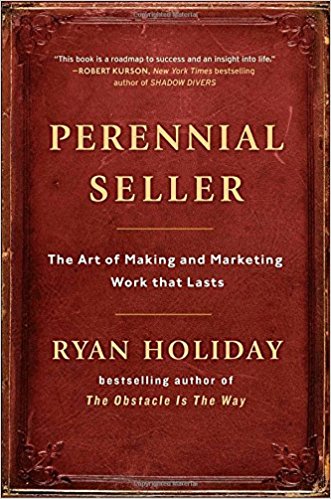
One Sentence Review: To create greatness, settle in for the long haul, and do the work that you will want to outsource to someone else, because you are the best person to create something that even has a slim chance to stand the tests of time.
Ryan Holiday has been in a “Pedro” like zone for the last few years (pedro from The RedSox in 98′-99 not Pedro from Napoleon Dynamite). The Obstacle is the Way and Ego  is the Enemy were two of my favorite reads in the last year, and the Daily Stoic is a perfect book to tackle in chunks every few days. So it was with great excitement that I grabbed his latest book Perennial Seller, especially since I have been trying to get into writing more over the last few months.
Right off the bat, this book is different. More workman-like and pragmatic that Ego or Obstacle. The first section reminded me of one of my all time top 5 faves the War of Art by Pressfield, which he then unsurprisingly references later on in the book several times. This is a down to earth request to get down to work. This is not the book you listen to on Audible to get inspired on your half an hour walk to the office. This is a book that grabs you by the collar and boots you in the ass and says “come on slacker … get to work.”
Unlike Pressfield who spends a great deal of time dissecting why its hard to get to work [hint: Resistance], Holiday instead walks you through the different stages that lie beyond that first phase of actually getting something out, noting that’s just one of many stages that lie ahead. Mainly because even after you finish something a) it probably still sucks b) you probably need outside help and c) you still have a lot more work to do in selling and promoting the damn thing. Along the way are lessons about drug dealing, selling out, pricing, being unique, building a platform, and a functional guide to actually making something that lasts.
Throughout Holiday weaves in interviews, conversations with superstars and not-so superstars, and experiences with clients and friends in his normal well researched and well thought out style.
And that’s why its a good thing that its way less like-able than his previous works, because it demands that you not scrape off some quick hit of inspiration, or increase your list of other books to read, or even grab some cool quotes to share with your co-workers [“sometimes a problem just needs less of you” is one I have used about 50 times in the last year]. Rather it demands that you learn from others successes and failures, and get going for whatever your passion truly is. Comedy, movies, writing, music, whatever your destiny.
If I were to guess, I would think it probably will do worse than most of his other books, because the market for inspiration and entertainment is probably much wider than the market for pragmatic guides on being a creator. But in that is a gift for his fans and followers.
If you asked me (and you didn’t) I would guess that Perennial is Holiday’s response to all of the requests and attention he has received that he rightly deserves. Almost a retort to thousands of new fans who likely ask him for advice on writing, business, or even life on a daily basis.
I would guess that, because I am one of those fans, who subscribed to his email list (platform) and even one day got up the gumption to ask him a question about a book idea that had been mulling around in my head for months. I did not ask a friend, or my wife, I asked him. And like a pro, he immediately wrote back with some simple and pragmatic advice. How many times a day does this story play out. Hundreds of times ? Thousands?
But in Perennial, I hear the voice of Holiday (because I use Audible, and its literally him reading) imploring myself and other fans to get on with it. “I gave you that advice a few months ago. Now what have you done with it?” Well if you are asking what I did with it, not very much …
Because it’s easy to get inspired, but much harder to create. Ego and Obstacle were great works that made me think, and made me more curious about philosophers like Seneca. But I didn’t actually have to do much … except get to the end of the book. Sure I tried a few of the concepts, and researched a few of the historical figures. But in those cases he is still doing the heavy lifting. When do YOU start with your heavy lifting?
Motivation is cheap, just go type it in to YouTube. Ideas are cheap and easy, just grab your dry erase marker. Entertainment is cheap, download the Hulu app on your phone in 45 seconds and get a free trial.
Defining your audience is hard. Starting with 1 sentence, 1 paragraph, and 1 page is hard. Figuring out how to build your platform with a 5 step process for your first 100 email addresses is hard. It’s boring, hard, un-sexy work. And that’s why its essential.
The tortoise probably doesn’t sign many autographs on his way to start the race against the hare …
When I was a younger lad, I used to read about perhaps my favorite electronic band of all time, The ORB, (perhaps my version of MxPx) and how one of their albums Pomme Fritz was almost made as a giant F-you to everyone but their most loyal fans. And if you listen to the album its hard to argue. After the first beautiful track, with the subtle
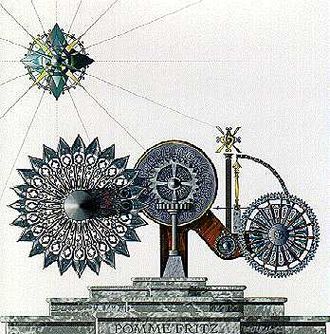
sample of “you’ve just had a heavy session of electo-shock therapy” the album literally goes off the rails and then into a ditch that is hiding inside of another ditch. You can easily sense that “Little Fluffy Clouds,” perhaps their most memorable track of all time, was in a sense their greatest frustration. After having created an entire new genere of “ambient house” [only is better that best] you could image Alex Patterson having his moment of utter disgust as people kept yelling “little fluffy clouds” at him much like Dave Chapelle would recount people yelling “I’m Rick James B*tch!!” as he walked with his kids at Disney World. Patterson got his group embroiled in quite a few lawsuits, and admits himself that this was a dark period. So naturally after the first beautiful track, it basically sucks. I don’t think it is any better for the “true hard-core fans” because I count myself as one. And I indeed think it sucks. Listening to it again as I write these words, yes … it really sucks…. badly.
So what would Holiday say about a band with a loyal following who is upset with their all of the sudden mainstream, quotable fame, that then takes a large dump in a french fry container and hands it off as an album. He would likely say, that’s dumb. Not because you can’t have a dud of an album and still survive, and not because anyone is perfect. But because “little fluffy clouds” was a blessing way more than it was a curse. Even the lawsuits that it generated were likely worth their weight in earned media. Because a rube like me first discovered them … guess how … by listening to their song Little Fluffy Clouds on a TV commercial for the newly re-lauched Volkswagen Bug in 1999. Apparently they weren’t too busted up about “selling out,” and maybe they realized this somewhere after their 1994-95 doldrums. But besides the beautiful remix of that song on the 93 live album, the truth is I haven’t listened to “Little Fluffy Clouds” once in the last 10 years. All the while songs like Blue Room, Towers of Dub, and Mile Long Lump of Lard are perennial masterpieces that I have listened to hundreds of times each since first becoming curious in 1999. They are my favorite electronic band of all time, and their best known song would not even break my top 10.
So thank you to Holiday and his brave new book. I have liked it the least because it demands the most. He asks us to stop dreaming about doing the work and settle in for the long haul. He asks to stop using his works as a quick tincture of inspiration under the tongue before you head off to work everyday, and instead do what you know you were destined to do. Even the brown, classical cover calls out in a non-flashy way: these ideas will stand the test of time, long after your Instagram DM’s and Twitter hacks have become irrelevant.
Because Holiday does a true service to way more than just his 1,000 true fans. He has chosen the harder path. Instead of just entertaining and inspiring, he has instead chosen to help. To help and to create hope. Much like Shawshank, this is a book about hope and second (and third) chances. The hope that you too can create that masterpiece that has been brewing inside of you all these many years. And hope is certainly an enduring perennial idea. Because it means you have dared to do more than sell or educate, you have dared to help change someones life by helping the creator that lives inside all of us.
 Simpletition - Shawn D. Madden